
Decline in ESBL Production and Carbapenem Resistance in Urinary Tract Infections during the COVID-19 Pandemic
The COVID-19 pandemic caused major changes in healthcare practices and antibiotic use, potentially affecting antimicrobial resistance (AMR). This study evaluated changes in extended-spectrum β-lactamase (ESBL) production and carbapenem resistance among bacterial pathogens causing urinary tract infections (UTIs) before and during the COVID-19 pandemic.
A retrospective cross-sectional study was conducted at King Fahad Medical City, Riyadh, Saudi Arabia, from January 2018 to December 2022. Positive urine cultures meeting the inclusion criteria were analyzed and categorized into pre-COVID-19 (before 3 March 2020) and during-COVID-19 periods. Bacterial identification was performed using the BD Phoenix and API systems. Antimicrobial susceptibility testing followed CLSI guidelines, while ESBL production was detected using the Double-Disc Synergy Test. Statistical analyses included chi-square tests, t-tests, and logistic regression.
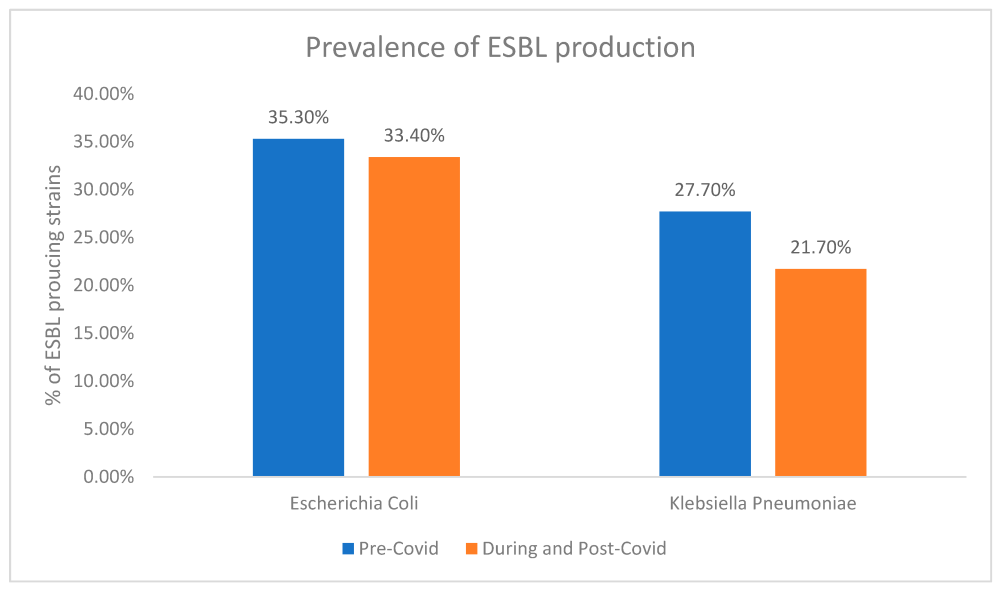
For ESBL analysis, 8631 urine cultures were included. Escherichia coli was the predominant pathogen (72.7%), followed by Klebsiella pneumoniae (25.8%). ESBL production decreased during the pandemic by 1.9% in E. coli and 6.0% in K. pneumoniae. Logistic regression showed that the odds of ESBL production were significantly lower during COVID-19 (OR 0.91, 95% CI 0.83–0.99; p=0.040). Male sex and outpatient status were associated with higher odds of ESBL production.
For carbapenem resistance, 9697 urine cultures were analyzed, including E. coli (64.7%), K. pneumoniae (22.9%), and Pseudomonas aeruginosa (11.0%). Carbapenem resistance decreased during the pandemic by 1.2% in E. coli, 10.7% in K. pneumoniae, and 7.9% in P. aeruginosa. Logistic regression demonstrated approximately 60% lower odds of carbapenem resistance during COVID-19 (OR 0.43, 95% CI 0.37–0.51; p<0.001). Male sex was associated with higher odds of carbapenem resistance.